


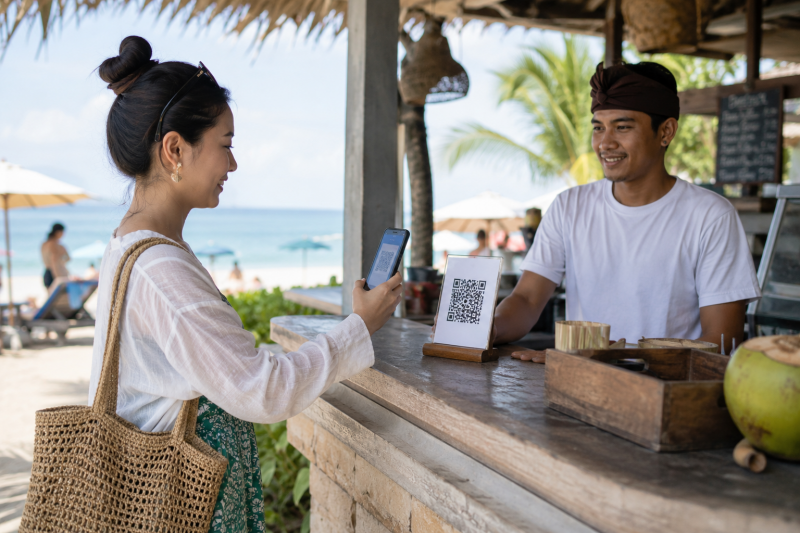
On 30 April 2026, a new cross-border payment system was launched between China and Indonesia, involving China UnionPay, Alipay, the Bank of China, and Bank Indonesia. The result is that Chinese travelers can now use their UnionPay or Alipay wallets to pay in RMB at more than 40 million merchants across Indonesia by scanning a QR code. Meanwhile, Indonesian travelers to China can also now pay with their own mobile wallets, in Indonesian rupiah.
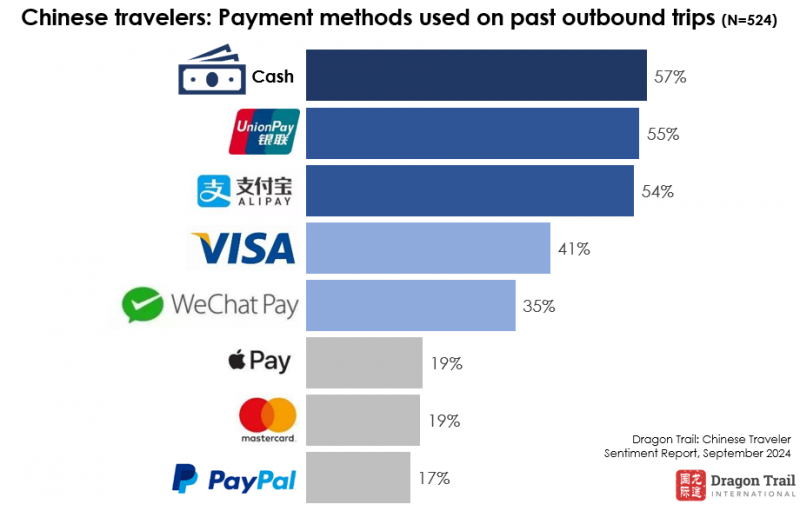
In China, most people have not paid for things with cash for years – Instead, payments are usually made through smartphones, and most of these transactions are made using either Alipay or WeChat Pay. Chinese travelers also prefer to keep using these payment platforms overseas, for convenience and security. In Dragon Trail’s September 2024 consumer survey, we found that more than half (54%) of outbound travelers had used Alipay on past outbound trips, and it ranked nearly as high as cash (57%) and China UnionPay card payments (55%).
Indonesia’s new system is integrated into the country’s already existing QRIS (Quick Response Code Indonesian Standard) system, meaning that Indonesia shops and businesses don’t need to do anything to get “Alipay-ready” anymore. They are now automatically enabled to accept cross-border payments through UnionPay and Alipay.
The development is part of a move to internationalize the RMB, with direct exchange between the RMB and the Indonesian rupiah without using US dollars as an intermediary currency. This also reduces costs to merchants.
During the 2026 May holiday, the number of transactions conducted by Chinese mobile wallet users in Indonesia using scannable QR codes increased by more than 80% month-on-month. There was also a monthly increase of more than 200% in the number of transactions in China by Indonesian wallet users.
The new initiative with Indonesia is part of a larger movement to integrate a fragmented global payments landscape, with China establishing cross-border QR code connectivity where payments are settled in local currencies in other Southeast Asian countries including Vietnam, Thailand, and Cambodia. Similar developments are happening further afield, too, in Brazil and Nepal, with plans underway for payment initiatives in Turkiye and Azerbaijan, according to a recent article by leading Chinese financial scholar Xue Hongyan.
These initiatives benefit both Chinese tourists and local merchants, and make destinations easier for Chinese visitors to navigate and enjoy like locals, without worrying about exchanging money or carrying cash. It also makes it all the more important for businesses in destinations that aren’t embracing similar initiatives to proactively adopt Chinese payment capabilities such as Alipay and/or WeChat Pay, to stay competitive and not be seen as overly inconvenient for Chinese visitors to travel and spend.
In destinations without such widespread rollout like Indonesia, Alipay can be used by tourism businesses to stand out from local competitors that aren’t Alipay ready, since the platform offers marketing support through special offers and coupons, and even extra tax refunds.
The wonderful partners we work with






Sign up for our free newsletter to keep up to date on our latest news
We do not share your details with any third parties. View our privacy policy.
This website or its third party tools use cookies, which are necessary to its functioning and required to achieve the purposes illustrated in the cookie policy. If you want to know more or withdraw your consent to all or some of the cookies, please refer to the cookie policy. By closing this banner, scrolling this page, clicking a link or continuing to browse otherwise, you agree to the use of cookies.